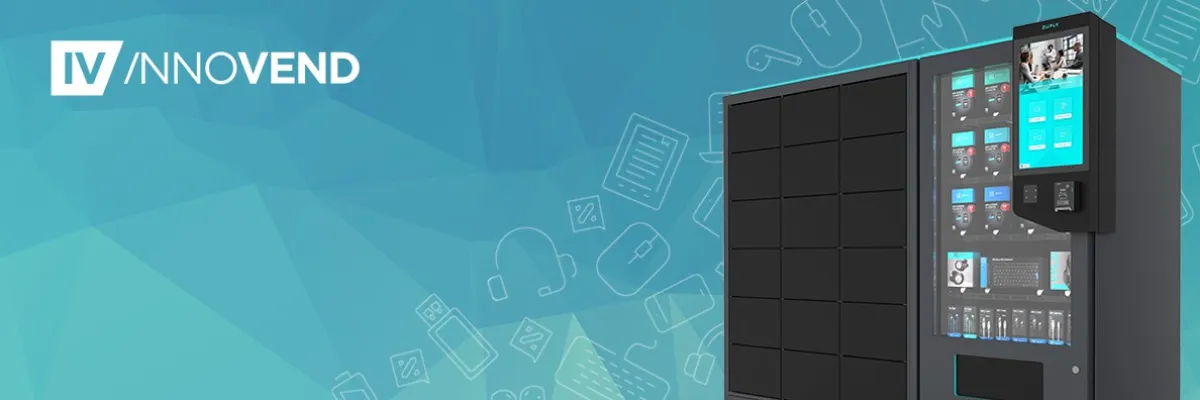
Innovend software for smart lockers and vending machines
Ongoing software development for smart lockers and vending machines, focused on frontend flows, hardware support, payment integrations, and the connection with the web platform.
What we delivered
A mix of strategy, design, and engineering that shortens the path from idea to working solution.
Skills
Technologies
Project overview
For this project, I worked on the software behind smart lockers and vending machines. Zuply is the hardware company and Innovend the software company. Together they deliver systems for organisations that want to issue, collect, or manage products through unattended machines and lockers.
The solutions are used in a broad range of settings, from locker-based pickup points to self-service vending environments. That meant the software had to do more than work technically, it also had to remain practical for a diverse client base and their end users.
Collaboration
Within the broader product landscape, I focused mainly on the machine-side software team. I worked alongside other developers, the hardware team, and the web/backend side of the product to introduce new functionality while keeping day-to-day machine behaviour stable and usable.
The business challenge behind the work
In products like this, software, hardware, and real-world use come together directly. Machines need to respond reliably, payment flows need to work properly, and the on-machine interface needs to stay clear for people who want to collect, buy, or manage items quickly.
So the challenge was not just shipping features. It was improving the full machine experience, from hardware behaviour to screen flows and the integration with the web platform behind it.
What I worked on
- Frontend functionality for vending machines and smart lockers.
- Hardware implementations for new or adjusted machine setups.
- Integrations with payment providers and other external systems.
- Connections between the machine software and the web backend.
Challenges
- Working in an existing codebase where several languages and subsystems had to work together.
- Supporting new hardware and machine variants without disrupting existing flows.
- Keeping payments, machine behaviour, and backend integrations aligned in a product used across different real-world scenarios.
Technical approach
- PHP and Slim API for machine logic, transactions, and communication with other parts of the platform.
- Vue, JavaScript, and TypeScript for the on-machine user interface.
- Python on Raspberry Pi as the bridge between software and hardware components.
- Buddy, Postman, and test flows to roll out changes and integrations in a more controlled way.
Result
- Support for new hardware types within the existing machine platform.
- Smoother UI flows on the vending-machine frontend.
- More reliable payment-provider integrations.
- Better alignment between machine software and the web backend.
- A stronger base for rolling out new machine capabilities.
Inspired by this project?
If you see similar friction or growth potential in your own business, we can translate this into a practical roadmap for you.
Other projects
 Software & Integrations
 Zuply and Vendo integration for smart vending machines
Integration of a new Vendo vending machine into existing vending software, with real-time visibility into dispensing events, errors, and stock through the Zuply platform.
 Software & Integrations
 Zuply and LinxiQ integration for smart vending machines
Integration of new LinxiQ vending hardware with added IoT sensing, connected to existing vending software and the Zuply platform for real-time machine insight.
 SaaS Platform
 Nomly platform for restaurants in development
Product concept and platform development for hospitality businesses that want to combine website, CMS, reservations, and marketing tools in one subscription.